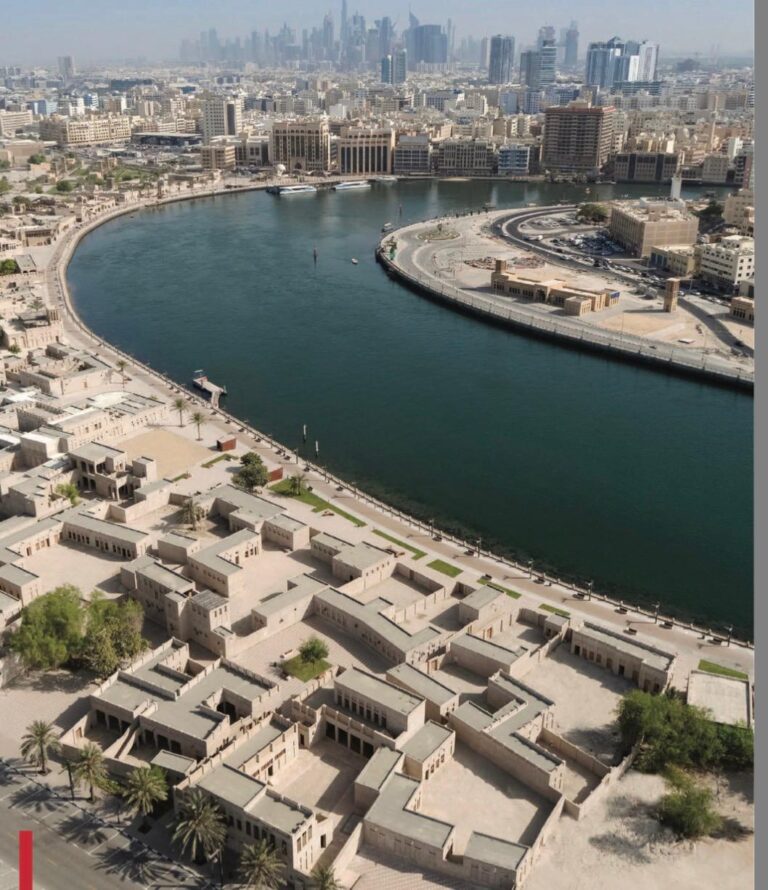
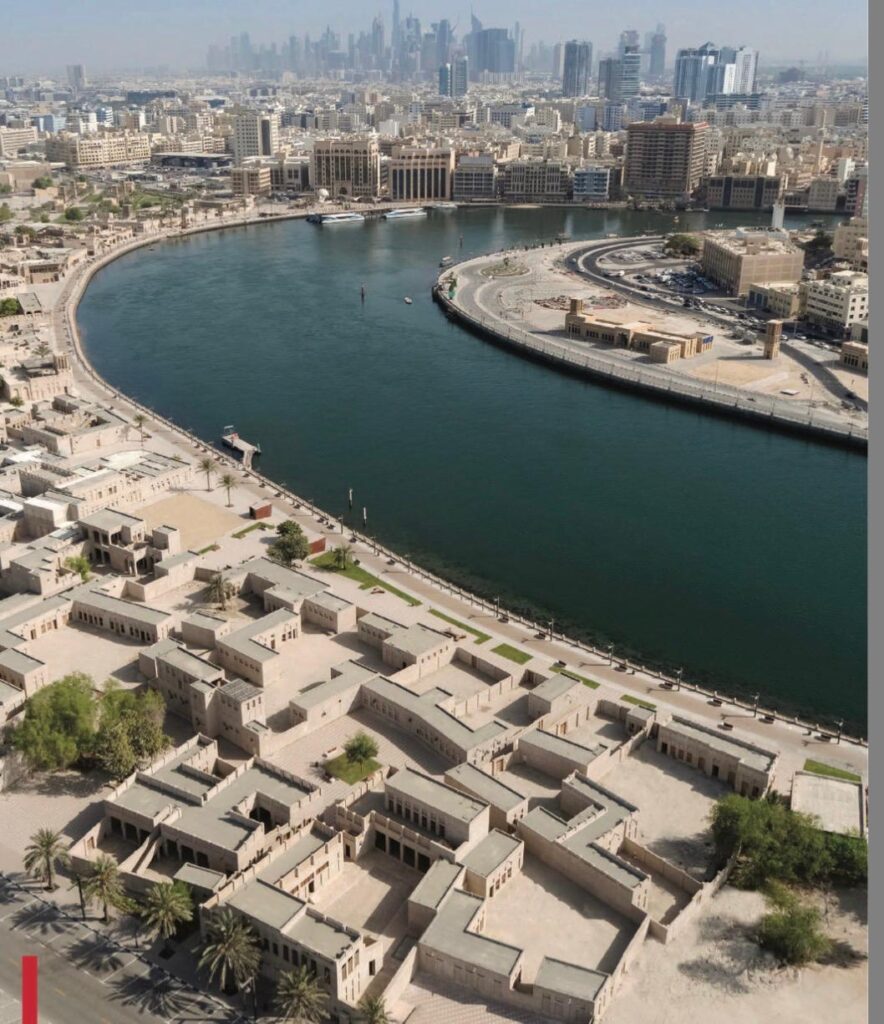
Al Shindagha is not only one of the oldest districts of Dubai – it is also closely linked to the legacy of Sheikh Rashid bin Saeed Al Maktoum, the visionary ruler who laid the foundations of modern Dubai. Along the banks of Dubai Creek, the vision we now recognize as modern Dubai began to take shape. It was here that Sheikh Rashid developed the understanding that would later guide the city’s transformation – from a trading settlement into a global hub.
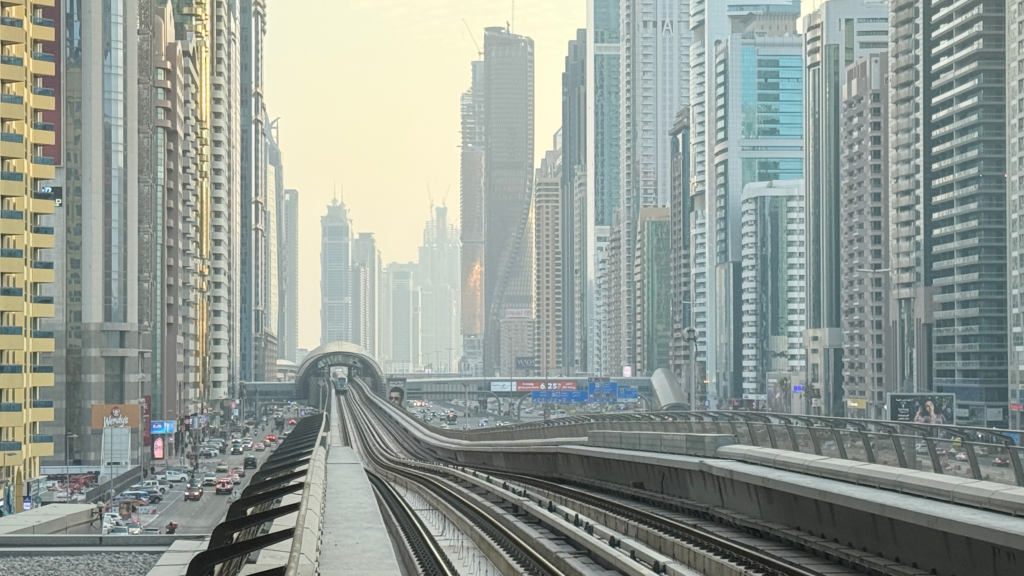
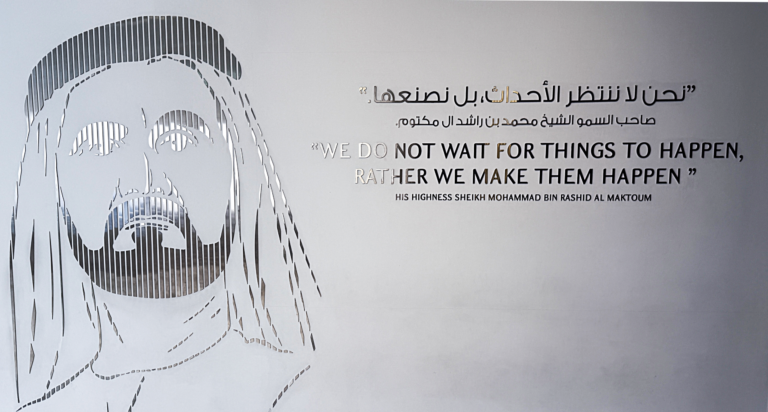
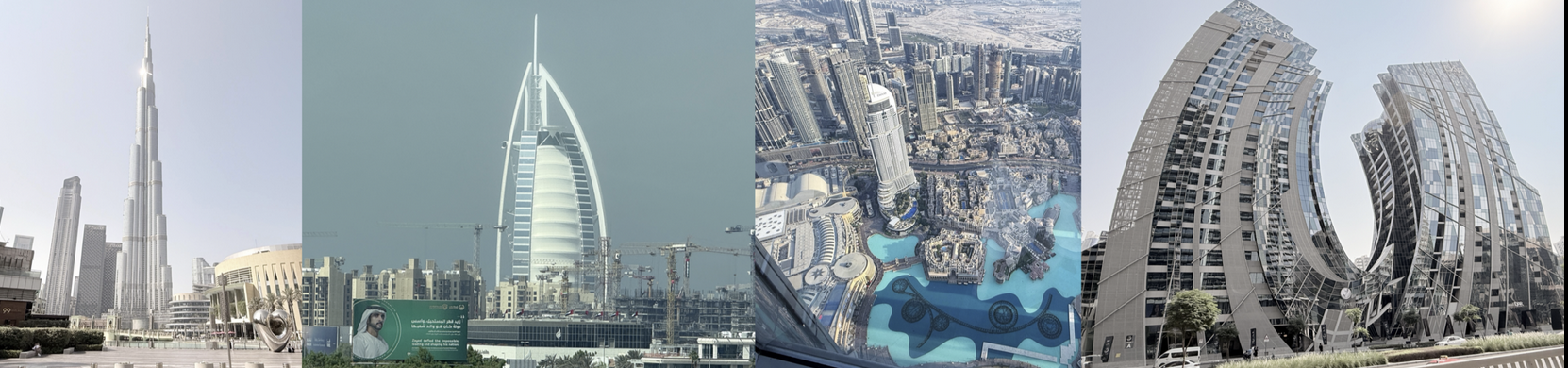
His son, Sheikh Mohammed bin Rashid Al Maktoum, carried this vision forward, elevating it to a new level of modernity and advancing it into the present. Rooted in tradition yet oriented toward the future, this leadership translated philosophy into practice: infrastructure was developed, institutions were established, and people aligned around a shared direction. What was once a place of simple shelter and trade evolved into a system designed to sustain life at scale. Dubai today can be understood as a tangible expression of that vision – visible in how people live, move, build, and connect.
A glimpse into history
Al Shindagha is one of the oldest areas in Dubai and played a central role in the city’s early history. Located at the confluence of Dubai Creek and the Arabian Gulf, it was originally a small coastal settlement where fishing, pearling, and trade shaped everyday life.
The first settlement in Al Shindagha dates back to the early 19th century (around the 1820s–1830s). This was when members of the Al Maktoum family settled in the area after establishing Dubai as a growing coastal town. Its location at the entrance of Dubai Creek made it ideal for trade, fishing, and pearling, which attracted early residents.
In early Dubai, settlements such as Al Shindagha Historic District developed around leading families like the family Al Maktoum. This was common across the Arab world, where tribal and family structures shaped society. People gathered near influential families for protection, leadership, and economic opportunities, especially in areas linked to trade and the sea. As a result, Al Shindagha became not only a residential area but also a center of governance and community life in early Dubai.
The traditional activities remained the backbone of life in Al Shindagha until the early to mid-20th century, especially before the 1930s–1950s, when several major changes transformed Dubai:
- Collapse of the pearl industry (1930s)
The introduction of cultured pearls from Japan made natural pearls less valuable, causing the local pearling economy to decline rapidly. - Discovery of oil (1960s)
Oil revenues allowed Dubai to modernize quickly, shifting the economy away from traditional industries. - Development of modern ports and trade hubs
New infrastructure like ports, roads, and airports replaced small-scale creek-based trade. - Urban expansion
As Dubai grew into a global city, people moved to newer areas, and traditional lifestyles changed.
I – Economic Decline Following the Pearl Industry Collapse and the Leadership Vision that Restored Sustainable Growth in Dubai
Crisis and Vision
The collapse of the pearl industry in the 1930s brought severe economic hardship. For many Gulf communities, this marked a period of decline. However, in Dubai, it became a turning point.
Instead of retreating, the leadership chose a different path: openness to trade, low taxes, and reinvestment of limited revenues into the city’s future. This approach helped maintain Dubai’s role as a regional trading hub, even in difficult times.
1. Economic hardship (1930s–1940s)
The collapse of pearling – once the main source of income – led to:
- widespread poverty
- loss of jobs for divers, traders, and boat owners
- migration, with some people leaving Dubai to find work elsewhere
Dubai was a small, struggling town during this time.
2. Survival through trade
Despite the crisis, Dubai did not disappear. Instead, it relied on:
- small-scale trade across the Gulf and India
- fishing and basic commerce
- its strategic location along Dubai Creek
Trade became the main lifeline of the city.
3. Smart leadership decisions
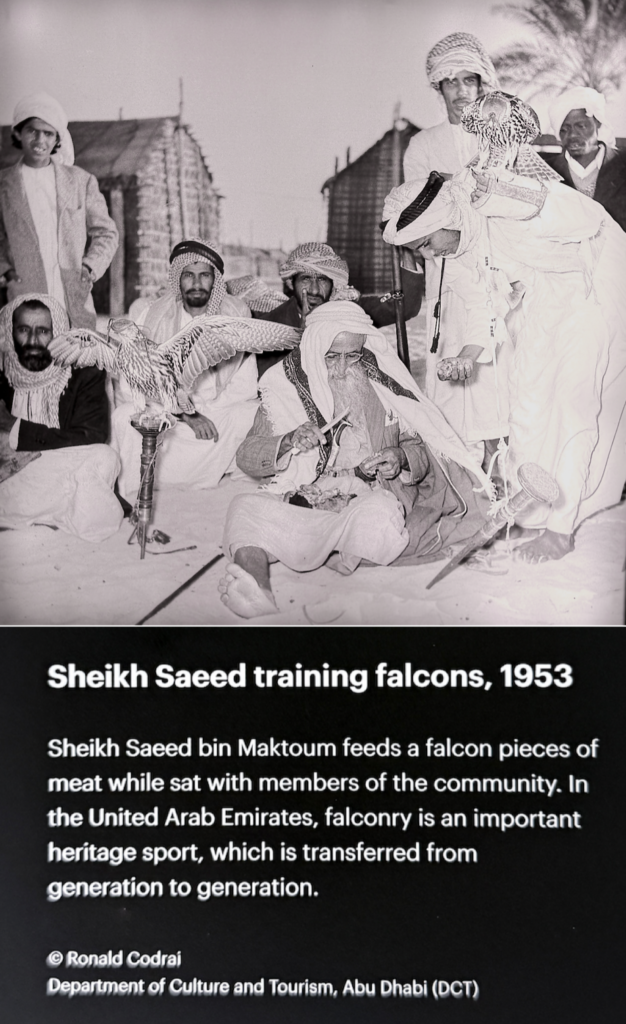
Under rulers like Sheikh Saeed Al Maktoum, Dubai adopted policies that helped it survive:
- low or no taxes to attract merchants
- open trade policies
- welcoming foreign traders (especially from Iran and India)
Prior to the discovery of oil, Dubai generated revenue through trade, customs duties, and port activities. Under the leadership of Sheikh Saeed Al Maktoum, these funds were strategically reinvested into infrastructure, enabling sustainable economic development. This approach established Dubai as a secure and attractive trading hub, even during periods of hardship.
By investing in infrastructure before achieving wealth, Dubai laid the foundation for its future success. Visionary leadership, perseverance, risk-taking, and a strong commitment to the well-being of its people were key factors in its transformation into a major global trade center, well prepared for rapid expansion following the discovery of oil.
Leadership vision
- Under the leadership of Sheikh Rashid bin Saeed Al Maktoum (ruler from 1958), Dubai made bold investments despite having limited financial resources.
- One of the most significant decisions was the dredging of Dubai Creek, a project that was considered risky at the time but proved to be crucial for the city’s future. By deepening the creek, larger ships were able to enter, strengthening Dubai’s position as a trading hub.
- In addition, port facilities were improved and traditional markets (souks) were expanded to support growing commercial activity.
- Sheikh Rashid’s vision was clear: by investing in infrastructure, trade would grow – and with it, the prosperity of Dubai.
Sheikh Rashid relocated to Zabeel Palace in the late 1950s to early 1960s, shortly before the discovery of oil, while continuing to maintain Al Shindagha as an important residence.
II – The Discovery of Oil and the Continuation of the Leadership Vision
In 1966, oil was discovered in Dubai at the Fateh oil field, marking a turning point in the city’s history. Although Dubai’s oil reserves were relatively modest compared to neighboring emirates, the impact was immediate and transformative.
Under the leadership of Sheikh Rashid bin Saeed Al Maktoum, oil revenues were carefully managed and strategically invested rather than relied upon alone. Instead of focusing only on oil, Dubai continued to develop its infrastructure, trade, and economy.
Oil income accelerated the construction of roads, ports, schools, and public services, improving living standards and supporting rapid urban growth. Projects that had begun before oil – such as port expansion and trade development – were now expanded at a much faster pace.
As Dubai entered the oil era and began to modernize, Al Shindagha gradually lost its central role.
Al Shindagha: From Historic District to One of the World’s Largest Museums
1. Decline as a residential and political center
When the ruling family moved to newer areas like Zabeel, Al Shindagha was no longer the seat of leadership.
- Wealthier families relocated to modern neighborhoods
- The area became less important in daily governance
2. Urban shift and partial abandonment
During the 1960s–1980s:
- Dubai expanded rapidly inland
- New infrastructure and housing replaced older districts
- Some traditional buildings in Al Shindagha fell into neglect
3. Rediscovery and preservation
Later, Dubai recognized the historical value of the area:
- Restoration projects began
- Historic houses were preserved
- Museums and cultural spaces were created
4. What it is today: A Living Legacy
Today, Al Shindagha has been carefully restored and reimagined as a cultural and heritage district. Its traditional houses, museums, and narrow lanes offer a glimpse into the past, preserving the story of how Dubai began.
More than a historic site, Al Shindagha represents the starting point of a vision—one based on leadership, resilience, and long-term thinking. It reminds us that Dubai’s transformation did not begin with oil, but with a commitment to growth, innovation, and the well-being of its people.